The Recovery Buyer's Guide
Choose recovery equipment that fits your goal, your space and your power supply, and know what to ask first.

How to Use This Guide
This guide is for anyone adding recovery equipment at home or in a studio. It covers eight kinds: traditional and infrared saunas, cold plunges, hot tubs, steam showers, red light, compression and float pods. Use Choose by Goal and Choose by Space to narrow it down, then read the sections you need. Much of this category is decided by power, water and floor load as much as by features. Everything here is about evaluating equipment, not health advice.
Choose by Goal
| Your Goal | Look At | Why |
|---|---|---|
| Intense Heat, with Steam | A traditional sauna | Heated stones and air run much hotter than infrared, and water on the stones makes steam. |
| Steam Inside the Shower I Already Have | A steam shower generator | A generator in a closet pipes steam into a tiled, enclosed shower. No sauna footprint is needed. |
| Heat Without Rewiring the House | An infrared sauna | Many run on a 120V circuit, where most traditional saunas need 240V. |
| Cold Immersion I Can Use Daily | A cold plunge with a chiller | The chiller holds the water cold without ice, and filtration keeps it usable between sessions. |
| Recovery From the Couch or Bed | Compression or red light | No water and no plumbing, and they run from a standard outlet. |
| Warm Water, Shared or Alone | A hot tub to share, or a float pod alone | A hot tub seats several people. A float pod is for one person floating in dense salt water. |
Choose by Space
| Your Space | What Fits | Check This First |
|---|---|---|
| Deck or Patio | A hot tub or cold plunge | Floor load: water weighs about 8.3 pounds a gallon, before anyone gets in. |
| Backyard | An outdoor traditional sauna | Power: many need a dedicated 240V circuit run by an electrician. |
| Spare Room | An infrared sauna | Power: many want a dedicated 120V, 15-amp circuit, not a shared outlet. |
| Basement or Ground Floor | A float pod | Floor load and room size: the salt alone can weigh hundreds of pounds. |
| Living Room, Bedroom or Apartment | Compression or red light | No water and no plumbing, and they run from a standard outlet. |
| A Tiled, Enclosed Shower with a Door to the Floor | A steam shower generator | A 240V circuit, a water feed and drain, and a sloped ceiling. The shower must seal. |
What to Look For
 01Traditional Saunas

Traditional Saunas
A wood room heated by an electric or wood-burning heater that warms stones and air. Water poured on the stones makes steam. Hybrid models combine a traditional heater with infrared panels.
- 01Heater Size for the Room — Heater output has to match the cabin's volume. Ask what room size it's rated for.
- 02Electrical Supply — Most electric heaters need a dedicated 240V circuit, and the amperage rises with the heater.
- 03Wood and Build — Solid wood walls and stainless hardware decide how a cabin holds up to years of heat and humidity.
Budgeting for the sauna and not the electrician. A traditional heater usually needs its own 240V circuit, and the amperage climbs with the heater: the models we carry range from 20 to 50 amps. Get an electrician's quote for your panel before you order.
- What heater comes with it, and what room volume is it rated for?
- What circuit does it need: voltage, amperage, and hardwired or plug-in?
- Is it rated for outdoor use, and what upkeep does the roof and finish need?
- Does it arrive as pre-assembled panels or a kit, and how long does assembly take?
- If it's for a gym, spa or rental, does the warranty cover commercial use?
 02Infrared Saunas

Infrared Saunas
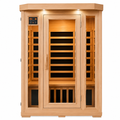
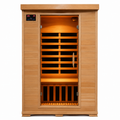
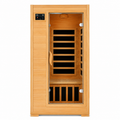
A cabin warmed by infrared heater panels that heat the body more directly than the air. Air temperatures run lower than a traditional sauna, and there are no stones or steam. Portable soft-sided versions also exist.
- 01Heater Type and Placement — Carbon or ceramic, far or full spectrum, and whether panels reach the legs as well as the back.
- 02Power — Many run on 120V but still want a dedicated circuit. Don't assume any outlet will do.
- 03Cabin or Portable — Wood cabins are permanent fixtures. Portable soft-sided units fold away when floor space is short.
Expecting a traditional sauna. Infrared runs at lower air temperatures, around 140°F at most on the cabins we carry against up to 194°F on our traditional models, and there is no steam. If intense, humid heat is what you want, buy traditional or a hybrid.
- What type of heaters does it use, and where are they placed?
- What is the maximum air temperature, and what circuit does it need?
- Can you share EMF measurements, and at what distance they were taken?
- How long does assembly take, and does it need two people?
- If it's for a gym, spa or rental, does the warranty cover commercial use?
 03Cold Plunges

Cold Plunges
An insulated tub kept cold by a chiller, so there is no ice to buy. The chiller is built in or sits alongside the tub, and many also heat, which turns the same tub into a warm soak.
- 01Chiller Power — Horsepower sets how cold and how fast. On one tub we carry, 0.3 HP reaches 37°F; 1 HP reaches 32°F.
- 02Sanitation — Look for filtration plus ozone or UV. Cold water still needs cleaning between sessions.
- 03Tub Build — Inflatable tubs set up in about fifteen minutes and pack away. Rigid tubs stay where they are installed.
Comparing the lowest temperature and ignoring how fast the chiller gets there. A small chiller may reach its rated temperature slowly, and can struggle in a hot garage in summer. Ask for the cooling rate, and the room temperature it was measured in.
- What horsepower is the chiller, and what is the lowest temperature it holds?
- How fast does it cool a full tub, and at what room temperature was that tested?
- What filtration and sanitation does it use, and what does weekly upkeep involve?
- Does delivery end at the curb or in place, and what does the tub weigh?
- If it's for a gym or studio, is it rated for commercial use, or residential only?
 04Hot Tubs

Hot Tubs
A heated, jetted tub for several people. Portable models, whether inflatable, foam-panel or rigid-frame, set up on a flat surface without a contractor. Some tubs are wood-fired rather than electric.
- 01Construction — Inflatable, foam-panel and rigid-frame shells differ in how well they hold heat and how permanent they feel.
- 02Jets — Air bubbles and hydro-massage jets are different things. Check which you are getting, and how many.
- 03Heating — Check heater wattage, maximum temperature, and whether an insulated cover is included.
Forgetting that the water weighs more than the tub. Water is about 8.3 pounds a gallon, so a portable tub holding around 220 gallons puts close to a ton on the surface before anyone climbs in. Confirm your deck or patio can carry it.
- What is the shell construction, and is an insulated cover included?
- Are the jets air bubbles, hydro-massage, or both?
- What is the water capacity, and the filled weight with people in it?
- What power supply does it need, and can it run on a standard outlet?
- Is it rated for commercial use, such as a gym or a short-term rental?
 05Steam Showers

Steam Showers
A generator about the size of a carry-on bag, installed in a closet or cabinet within a set distance of the shower, that boils water and pipes steam to a head low on the shower wall. A control inside the shower sets time and temperature. The shower must be enclosed, tiled or stone, with a door that seals to the floor.
- 01Does the Shower Qualify — Sealed to the ceiling, vapor-tight walls, a door to the floor, a sloped ceiling so condensation runs off, and a seat away from the steam head. This decides the purchase before the generator does.
- 02Size by Volume and Materials — Kilowatts follow the cubic feet of the enclosure, then go up a size for stone, glass or a ceiling over seven feet. Between two sizes, take the larger one, never the smaller, and have the maker confirm it.
- 03Power and Plumbing — A dedicated 240V circuit, a cold water feed, a drain and an inline filter changed every six months, all fitted by a licensed installer, which the warranty requires. The generator sits outside the shower.
Buying by shower footprint instead of volume and materials. A 4 by 6 shower in ceramic tile with a seven-foot ceiling and the same shower in marble with a nine-foot ceiling need different generators, and the smaller one never gets the room hot. The second mistake is skipping the licensed installer, which voids the warranty on the package we carry.
- Does my shower qualify as it is, and what has to change?
- Which size do you recommend for my dimensions and materials, confirmed in writing?
- What circuit, water feed, drain and filter does it need?
- What is covered for life, what for a year, and what voids it?
- What must a licensed installer do for the warranty to apply?
 06Red Light Therapy

Red Light Therapy
LED panels, pads or blankets that emit red and near-infrared light. Panels stand or mount and cover a large area from a short distance. Pads and blankets wrap directly around the body.
- 01Irradiance, Qualified — Ask the measuring distance and the instrument used. A number without both cannot be compared.
- 02Wavelengths — Red and near-infrared are the core. More wavelengths are not automatically better.
- 03Coverage — A single pad covers one area. Full-body coverage takes a large panel, a multi-pad set or a blanket.
Comparing irradiance numbers that were measured differently. One panel we carry publishes 174 mW/cm² at 8 inches on a solar meter and 119.28 at 6 inches on a spectrometer, for the same hardware. Without the distance and the instrument, the bigger number proves nothing.
- What is the irradiance, at what distance, and measured with which instrument?
- Which wavelengths does it use, and in what proportion?
- How large is the coverage area, and what would full-body coverage require?
- What flicker and EMF measurements can you share?
- If it's for a spa, gym or clinic, does the warranty cover commercial use?
 07Compression Therapy

Compression Therapy
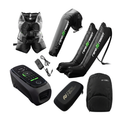
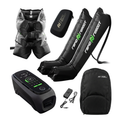
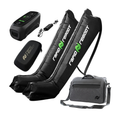
A control unit that inflates sleeves around the legs, and sometimes the hips and arms, in sequence, so the pressure moves along the limb rather than squeezing everywhere at once.
- 01FDA Clearance — In the US, compression sold for circulation is a Class II medical device. Ask for the 510(k) number.
- 02Pressure Control — Check the pressure range, and whether each chamber can be set on its own.
- 03Garments and Fit — Check sleeve sizing, and whether garments work with other generations of control unit. Some don't.
Reading "FDA registered" as "FDA cleared". Registration means a company is listed with the FDA. Clearance means the device itself went through review, and it comes with a K number you can look up in the FDA's public database. Ask for the number.
- Is this system FDA cleared, and what is its 510(k) number?
- What pressure range does it run, and can the chambers be set individually?
- How are the garments sized, and do they work with other control units?
- How is the warranty split between the control unit and the garments?
- If it's for a team, gym or clinic, does the warranty cover commercial use?
 08Float Pods

Float Pods
An enclosed tank of shallow, heavily salted water kept near skin temperature, so you float without effort. Home units range from inflatable pods to one-piece fiberglass shells.
- 01Room and Floor — Check the minimum room size and the floor load. One pod we carry needs a 10 by 10 foot room.
- 02Salt and Water Care — The salt load is large. Ask how filtration, UV and dosing keep the solution clean.
- 03Build — Inflatable pods are portable. One-piece fiberglass is permanent, with better sound and heat insulation.
Planning for the pod and not the salt. One home pod we carry calls for 400 kg of salt to start, close to 900 pounds, before the water goes in. That is a floor-load question, a delivery question and an ongoing cost to ask about.
- What room size and floor load does it need, filled and in use?
- How much salt does it take to start, and how often is it topped up or replaced?
- What filtration and sanitation does it run, and what is the weekly upkeep?
- Does delivery end at the curb, and is installation available?
- If it's for a spa or studio, is it rated for commercial float sessions?
Before You Buy
- Confirm the power supply: voltage, amperage, and whether it needs a dedicated circuit or an electrician.
- Check the floor load for anything that holds water, and that the surface is flat.
- Walk the delivery route, and ask whether delivery ends at the curb or in the room.
- Plan the water care: filtration, sanitation, draining, and the time it takes each week.
- Read the warranty for each part separately: control units, heaters, garments and shells.
- If it lives outside, confirm it is rated for outdoor use through your winter.
- Ask what a return would cost you, freight included.
- For a steam shower, measure the enclosure in cubic feet, note the wall and ceiling materials, and get an electrician's quote for the circuit before ordering.
Asked Before Buying
Traditional or Infrared Sauna?
Traditional runs hotter, allows steam, and usually needs a 240V circuit. Infrared runs cooler, with no steam, and many units run on 120V. Choose by the heat you want and the power you have, then compare builds.
Do I Need an Electrician?
Often. Most traditional saunas need a dedicated 240V circuit, and many infrared saunas, plunges and hot tubs want a dedicated circuit even at 120V. Check the spec sheet, and get a quote before you order, not after delivery.
Can a Cold Plunge Also Run Warm?
Many can. A chiller that heats as well as cools lets the same tub work as a warm soak, and the ones we carry reach 104 to 107°F. Not every model heats, so check before you assume it.
Is Portable Equipment Worth It?
It trades permanence for flexibility. Inflatable plunges and hot tubs, and soft-sided saunas, set up quickly and move with you. If you rent or might move, portable is often the right call. If it has a permanent home, compare rigid builds.
Can I Use These in a Gym, Spa or Rental?
Only if the warranty says so. Several manufacturers exclude commercial use, and some tubs ship for residential use only. Get commercial coverage confirmed in writing before you buy for a business.
Can I Add Steam to the Shower I Have?
Only if it can be sealed. The shower needs tiled or stone walls to the ceiling, a door that closes to the floor and a ceiling that holds steam, usually sloped so condensation runs off. If yours is open or curtained, a contractor has to change it first. Send us the dimensions and materials and we will say what qualifies.
Is Any of This Medical Treatment?
This guide covers how to evaluate equipment, not health outcomes. Where a device is FDA cleared, its cleared wording is what it has been reviewed for. For a medical condition, talk to your doctor before you buy.
Go Further on One Category
For more detail on a specific category, these guides cover it in full.
- How to Choose a Red Light Therapy PanelIrradiance, wavelengths, reading a spec sheet, and buying for a business.
- How to Choose a Compression SystemFDA clearance, pressure and chambers, garment sizing, and buying for a team or clinic.
- How to Choose a Traditional SaunaReal capacity, heater sizing, electrical, build quality, and buying for a business.
- How to Choose an Infrared SaunaEMF figures, heater types, the circuit you need, cabin or portable, and buying for a business.
- How to Choose a Cold PlungeChiller sizing and cooling time, tub build, water care, delivery, and buying for a business.
- How to Choose a Hot TubHeating time, construction, jets, water weight and care, and buying for a rental or business.
- How to Choose a Steam Shower GeneratorWhether your shower qualifies, sizing by cubic feet and materials, power and plumbing, controls, the installer rule and the warranty.
- How to Choose a Float PodSalt and floor load, room requirements, water care, build, and buying for a float center.
Ask Every Seller, Including Us
Send the Ask the Seller questions to every seller you are considering, including us. If someone else answers them better, buy there.